
Sussex Devolution: What the New Mayoral Authority Means for Local Businesses
(And How to Get Ahead of It)
If you run a business in Sussex, some of the biggest decisions affecting our region are about to be made by someone we haven’t voted for yet. That changes in May 2028.
Sussex devolution is no longer an idea being debated in Westminster committee rooms. The Sussex & Brighton Strategic Authority held its inaugural meeting on 15 April 2026, the English Devolution and Community Empowerment Act received Royal Assent on 29 April 2026, and a directly elected mayor is coming in May 2028, with control over a £1.14 billion investment fund, powers over transport, skills, housing and economic development, and a brief to shape the region for the next 30 years.
Most business owners have heard the word “devolution” and filed it somewhere between “HMRC correspondence” and “things to read on a quieter day.” This is that quieter day.
What’s Actually Happening? The 60-Second Version
There are two separate but related processes running simultaneously, which is part of why devolution can feel confusing.
The first is local government reorganisation. According to BBC News, all 12 district and borough councils in Sussex are being abolished and replaced by a smaller number of larger unitary authorities. The government’s preferred minimum size is around 500,000 residents, big enough to be financially sustainable. Brighton & Hove currently sits at around 300,000 and may need to expand, with westward growth to include Shoreham-by-Sea, Lancing and Worthing emerging as the most discussed option.
The second process is devolution itself: the transfer of powers and funding from Whitehall to a new regional tier. As Brighton & Hove City Council’s devolution overview makes clear, the new Strategic Authority is not a merger of existing councils. East Sussex, West Sussex and Brighton & Hove councils continue to exist and carry on delivering our day-to-day services. The new tier sits above them, taking on responsibilities currently held by national government departments.
Together, these changes affect an area covering more than 1.5 million people across Sussex. This isn’t a minor administrative reshuffle.

What Powers Is the New Mayor Getting?
The mayor of Sussex & Brighton will have substantial practical authority over the things that shape a business environment, as set out in the Brighton & Hove City Council devolution overview:
Transport. Strategic oversight of transport across Sussex, including bus franchising, rail coordination and priorities for the key route network, including the A27, which anyone who has tried to get from Brighton to Chichester on a Friday afternoon will appreciate.
Skills and employment. The Strategic Authority takes over adult education funding and employment support. That means greater local control over the courses available at colleges, the funding for apprenticeships and how the region attracts and retains skilled workers.
Housing and planning. The mayor produces a Spatial Development Strategy for Sussex, a regional blueprint for where new homes, commercial premises and infrastructure get built. If you have any upcoming plans to expand, move offices or take on a new lease anywhere in the county in the next decade, this strategy will shape what’s available and where.
Economic development. Business support, Local Growth Hub provision and innovation funding will all fall under the new authority. If you’ve ever applied for a grant or accessed business advice through a regional body, expect these channels to be reshaped around Sussex-specific priorities.
Public safety. The mayor also takes on Police and Crime Commissioner powers, with fire and rescue services in scope.
The breadth of these powers means Sussex devolution represents a genuine shift in who decides what gets built, funded and prioritised in the region, not a bureaucratic reshuffling for its own sake.
The Money: Where £1.14 Billion Is Going
The headline figure is a £1.14 billion long-term investment fund spread over 30 years, averaging £38 million per year. In the shorter term, £30.4 million will be released before the mayor is even elected, alongside £9 million in capacity funding over four years to help the new authority become operational.
There’s a catch. The mayoral election was originally planned for May 2026, but was delayed to May 2028 to align with local government reorganisation. The County Councils Network, representing four affected areas including Sussex, was unsparing in its response. “Less than a year ago, this government promised a ‘devolution revolution’ to extend the benefits of new powers and funding to county and rural areas,” said CCN chairman Cllr Matthew Hicks. “Today’s announcement is bitterly disappointing.”
The Sussex and Brighton Combined County Authority Regulations 2026, debated in the Lords in March 2026, confirmed the practical consequence: in the interim the new authority holds most of a Mayoral Strategic Authority’s powers, but the powers reserved exclusively to an elected mayor, along with the full investment settlement, are deferred until after the 2028 election.
The bottom line: real money is flowing now, but the full financial firepower arrives in 2028. That gives us roughly two years to understand the landscape before the bigger decisions land.
The Map Is Being Redrawn, and It Might Affect Your Postcode
This is where things get a bit more concrete.
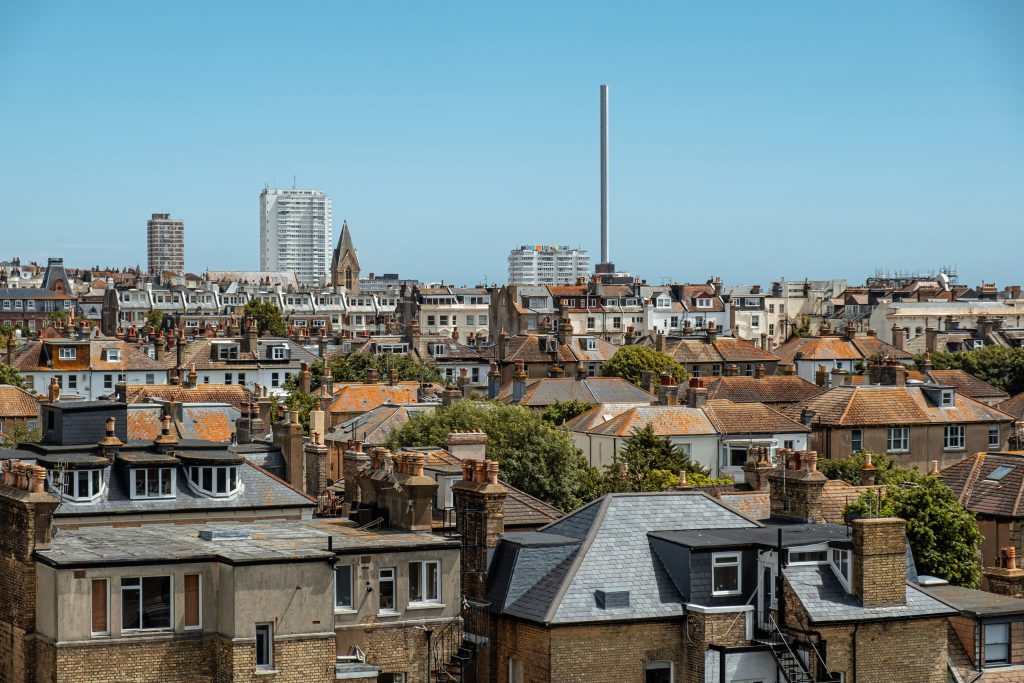
Every district and borough council in Sussex is being abolished. The exact shape of the new unitary authorities is still being worked out: West Sussex County Council has been consulting on a modified two-unitary proposal, and BBC News reported that Crawley has been in exploratory talks about potentially joining a Surrey-based authority rather than staying within Sussex.
This matters because the council we deal with for planning applications, business rates, licensing and routine services is going to change. The timelines are still being finalised, but the direction of travel is settled.
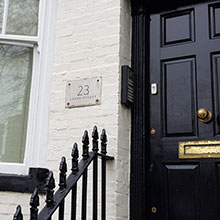
For Sussex businesses along the Brighton-to-Worthing corridor (which happens to include both JetSpace locations: 23 Grand Parade in central Brighton and Brighton City Airport in Shoreham), the changes could be particularly significant. The westward expansion of Brighton & Hove to include Shoreham, Lancing and Worthing is the most discussed option in public feedback, which would create a larger, more joined-up local authority across a substantial stretch of the south coast. (Shoreham has long punched above its weight as a base for Sussex small businesses, and the boundary conversation only sharpens that case.)
Whether that’s a good thing might depend on whether you’re Brighton-first or Shoreham-first. With offices in both, we’re honestly a little torn. What’s not in doubt is that the councils we’re dealing with today won’t be the same as the one we’re dealing with in two years’ time.
Five Practical Steps to Get Ahead
The structure is in place, the money is moving and the clock is ticking toward 2028. Here’s what you can actually do about it.
- Watch the Strategic Authority’s procurement pipeline. The new body will be commissioning services, consultancy and infrastructure work. £38 million per year is a substantial annual budget, and a good proportion will go to local suppliers. Keep an eye on the Authority’s website and register as a potential supplier when the system goes live. Procurement portals tend to favour those who are already on them.
- Engage with the Local Growth Hub now, before the new funding fully arrives. The Sussex Local Growth Hub provides free business support, advice and connections. Getting on their radar before devolution reshapes how business support is funded and delivered puts you in a stronger position to benefit from new programmes as they come online. Sussex-based businesses that lean into a hyper-local supply chain tend to be the first to hear about regional funding calls, too.
- Monitor the Spatial Development Strategy. The mayor’s regional plan will determine where new commercial space, residential development and infrastructure gets built across Sussex for the next 20 years. If you’re planning a premises move or expansion anywhere in the county, this document (and the consultations around it) is worth following.
- Look into adult skills funding as it develops. One of the practical benefits of devolution for employers is greater local control over training provision. As the devolved skills budget comes online, there are likely to be more locally relevant, subsidised options for your team. If upskilling is on your agenda, track what becomes available through Sussex-based providers as the new funding structure beds in.
- Follow the mayoral candidates and their business platforms. Six candidates have been announced spanning Labour, Conservative, Liberal Democrat, Green, Reform UK and Independent. The winner’s priorities will shape transport investment, planning policy and business support for the 2028 to 2032 term. You don’t need to read every manifesto, but knowing where the frontrunners stand on economic development is worth an hour of your time before the ballot opens.
Not Everybody Is Convinced…
It wouldn’t be honest to present Sussex devolution as a universally welcomed development.
The government’s own Sussex and Brighton devolution consultation response drew 6,122 responses, and 71% of the public who responded disagreed with the proposal. According to BBC News, two-thirds of the public didn’t agree the mayoral model would deliver benefits or improve services, with scepticism sharpest among residents, town and parish councils and businesses, as distinct from the larger councils and academic institutions, which tended to be more supportive. Concerns centred on the risk of rural areas being dominated by Brighton & Hove, erosion of local identity and a general lack of political trust.
Those concerns are legitimate, and the new mayor will need to earn credibility with sceptical parts of the county. But the process is legally established and moving: the Authority exists, the money is flowing and the election is on the calendar. Regardless of where you stand on the politics, understanding how this new layer of decision-making works, and how to engage with it, is straightforward common sense for any of us running a business in Sussex.
If you found this useful, you might also enjoy our guides to what the UK government’s industrial strategy means for SMEs, how Sussex businesses are feeling about the future and why base your business in Brighton.
Looking for new serviced office space in Brighton & Shoreham?
Call on 01273 917977 or complete our enquiry form.
Call on 01273 917977 or complete our enquiry form
enquire book a viewing