
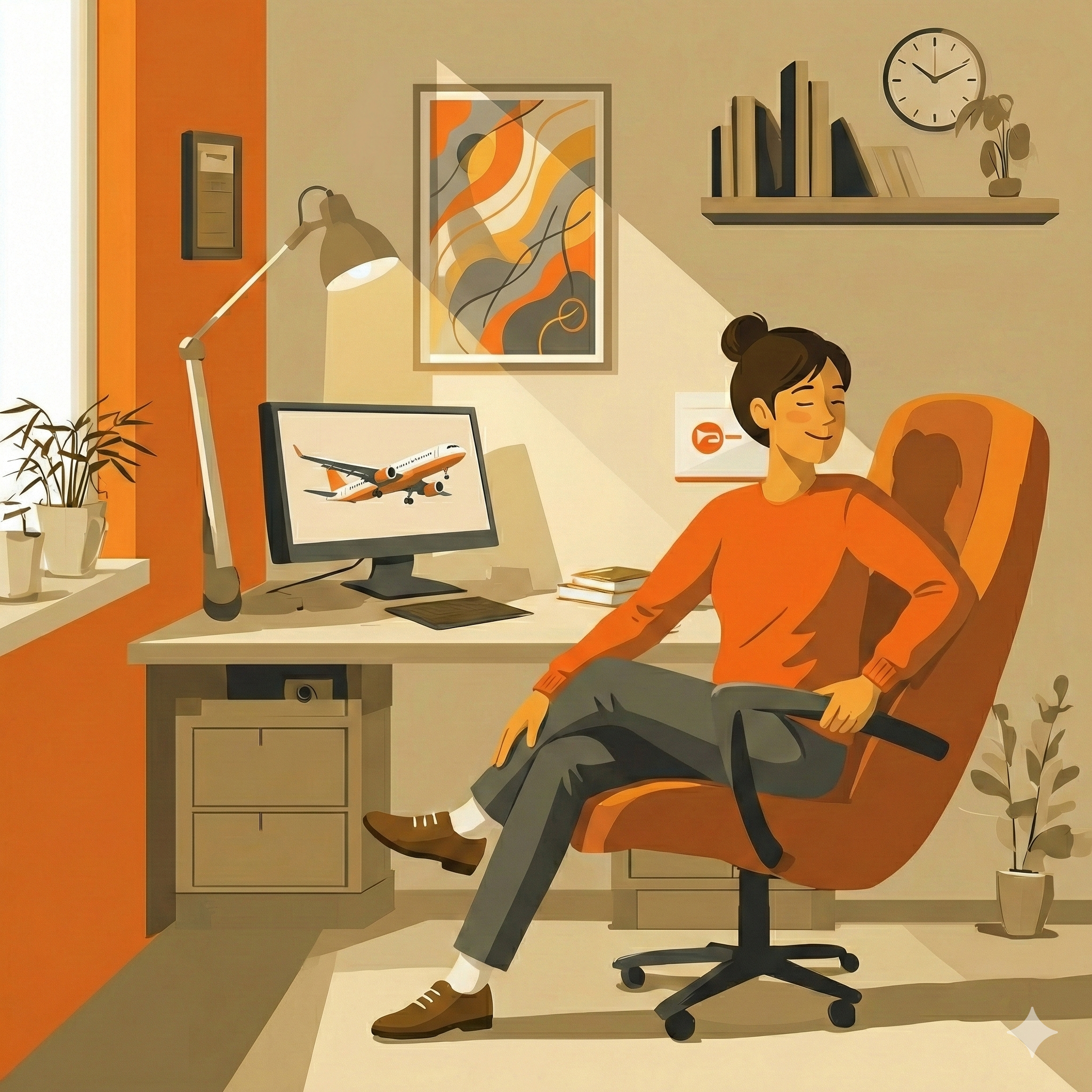
5 Desk Stretches to Beat the 3 PM Slump (Without Leaving Your Office)
It’s 2:55 PM. You’ve had lunch (perhaps at one of our most recommended healthy local lunch spots in Brighton), you’ve cleared your morning inbox (because you recognise the value of inbox zero for a productive work environment), and you’re ready to tackle that big project.
But then it hits you. The fog. The heavy eyelids. The total loss of concentration and focus.
First of all: it’s not just you. The afternoon slump is a biological certainty, not a sign of laziness. It’s part of your circadian rhythm – your natural internal process that regulates the sleep-wake cycle. Between 1:00 PM and 3:00 PM, the human body experiences a natural dip in core temperature and a release of melatonin (the sleep hormone), mimicking what happens to us at night.
Trying to power on through the slump is rarely the answer and staying in one position for prolonged periods can lead to health issues ranging from fatigue to chronic neck pain. The most effective way to wake up your brain? Movement.
While sitting at a desk is a necessity for most of us, maintaining the best posture isn’t always easy. Poor posture, like letting your head forward or shoulders slump, creates tension in the body. The most effective fix isn’t just caffeine – it’s physical activity. Taking regular breaks to move helps oxygenate the brain and reset your focus.
Disclaimer: These exercises are gentle, but if you feel pain at any point, stop immediately. Always consult a medical professional if you have existing injuries.
Ready to reset? Here are 5 “stealth” desk stretches you can do right now to reset your focus.

1. The “Tech-Neck” Reset
The Problem: Staring at a screen often pushes the head forward, locking the neck muscles. The Move:
- Sit comfortably with your feet flat on the floor.
- Keep your head straight and look forward.
- Slowly tilt your head so your left ear moves toward your left shoulder.
- For a deeper stretch, use your left hand to gently pull your head a few inches further.
- Keep the opposite shoulder down (don’t let it rise!).
- Hold for 10-15 seconds and repeat on the right side. Why it works: It releases tension in the upper trapezius, a common source of neck pain.
2. The “Inbox Shrug” (Shoulder Rolls)
The Problem: Stress causes us to hunch, pulling our shoulders forward and rounding the upper back. The Move:
- Start in a neutral sitting position.
- Perform a shoulder shrug: raise your shoulders high up toward your ears.
- Slowly roll them back, squeezing your shoulder blades together.
- Drop them down to the starting position.
- Repeat 5 times to get those shoulders stretching. Why it works: This increases blood flow and signals your body to drop physical stress. It’s a classic move recommended by the Chartered Institute of Physiotherapy, no less, and aims to instantly lower physical stress signals.
3. The “Anti-Slouch” Chest Opener
The Problem: Keyboarding tightens the chest and pulls the upper body inward. The Move:
- Sit on the edge of your chair.
- Reach behind you and interlace your fingers, palms facing inward (or hold the back of the chair).
- Keep your arms straight and gently push your chest out.
- Gently raise your arms a few inches if flexibility allows.
- Take deep breaths, feeling the stretch across your chest. Why it works: It counters the “hunch” and improves breathing capacity.
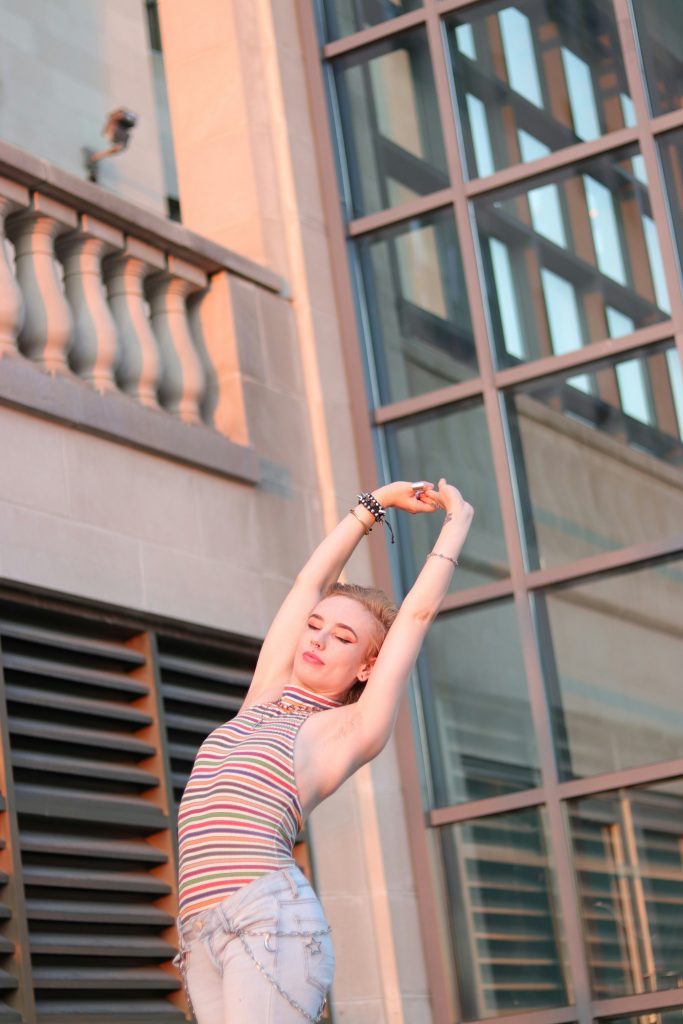
4. The Seated Spinal Twist
The Problem: The lower back gets stiff from lack of rotation throughout the day. The Move:
- Keep your feet planted.
- Place your left hand on your right knee and your right hand on the back of the chair.
- Gently rotate your torso to the right.
- Hold the position without forcing it.
- Return to centre, swap hands to the other side, and repeat. Why it works: A gentle back stretch helps lubricate the spinal joints and reduce stiffness. The NHS actually recommends this specific move to improve mobility for anyone sitting for long periods.
5. The Under-Desk Leg Extension
The Problem: Sitting with bent knees for hours restricts blood flow in the legs. The Move:
- Sit back in your chair.
- Extend your right leg out until it is a straight leg.
- Flex your right foot, pointing your toes up.
- Gently bend forward at the waist (keep your back straight!) until you feel a stretch in the hamstring.
- Hold, then switch to the left leg. Why it works: It wakes up the muscles in the leg and lower back.
Bonus: The “Standing Reset”
If you have enough space in your office to stand, try this:
- Stand upright with feet shoulder width apart.
- Slowly bend forward at the waist, letting your arms hang down toward your toes.
- Relax your neck and let your head hang heavy.
- Rest here for a moment before rolling up slowly.
Movement is Medicine
Performing these movements throughout the day acts as a reset button for your body and mind.
However, sometimes the best cure for the slump is a total change of scenery. At JetSpace, we design our offices with this in mind – whether it’s grabbing a coffee in the breakout area or taking a break to soak up a spot of afternoon sun in the courtyard. It’s also a lot easier to bust out your daily desk exercises in a private office than it is in a shared space, so that’s another reason many of our tenants prefer the quiet calm of their own personal office suite.
So, shake out that arm, fix your posture, and finish the day strong.
Thinking of embracing a serviced office in Brighton or Shoreham to give yourself a more conducive working environment? Come and talk to us, we’d love to show you round.
Call on 01273 917977 or complete our enquiry form
enquire book a viewing

&p[url]=https://www.jetspace.work/5-desk-stretches-to-beat-the-3-pm-slump-without-leaving-your-office&p[images[0]=https://www.jetspace.work/wp-content/uploads/desk-stretch.png)