
From ‘Coffee Badging’ to ‘Chronoworking’: Decoding the 2026 Workplace Dictionary
If you thought “hybrid work” was the final word in the great office debate, think again.
As we step into 2026, the world of work has evolved from a simple choice between home and office into a living dictionary of new behaviours, habits, and, inevitably, buzzwords. And while they might sound like passing fads, each one reveals something real about how people feel about productivity, autonomy and company culture today.
So let’s dive in and uncover:
- What the latest 2026 workplace buzzwords really say about your team
- How each trend reveals deeper challenges in modern work culture
- Practical ways to create an office environment that solves those challenges
By decoding the 2026 workplace dictionary you can discover how your Sussex business can stay one step ahead.
The 2026 Workplace Landscape
The past year has rewritten the rules of work yet again. From AI adoption and flexible work arrangements to renewed debates about job security and return to office policies, 2026 workplace trends are being shaped by one common thread: balance. Business leaders everywhere are trying to balance technology with humanity, productivity with wellbeing, and flexibility with connection.
Across Sussex, many organisations are feeling this shift first-hand. Employers want to retain talent and maintain engagement, while employees want choice, psychological safety, and meaningful career growth. Gen Z workers and early career employees, in particular, are asking for work environments that recognise soft skills, emotional intelligence and creative thinking as much as technical ability.
The World Economic Forum recently identified human centric skills as a key driver for the future of work. As AI tools and AI agents automate routine tasks, companies are turning their focus back to what makes teams thrive: collaboration, problem solving and clear communication. These are the foundations of any thriving workplace culture. We’ve previously covered some of the top AI powered tools to support your business and if you’ve not already read it be sure to get it on your reading list!
When you hear new buzzwords emerging in the job market, don’t dismiss them as jargon. They are signals that the workforce is evolving faster than most office strategies. Understanding what these terms really mean can help Sussex business owners stay ahead and create offices where work belongs once again.
Coffee Badging
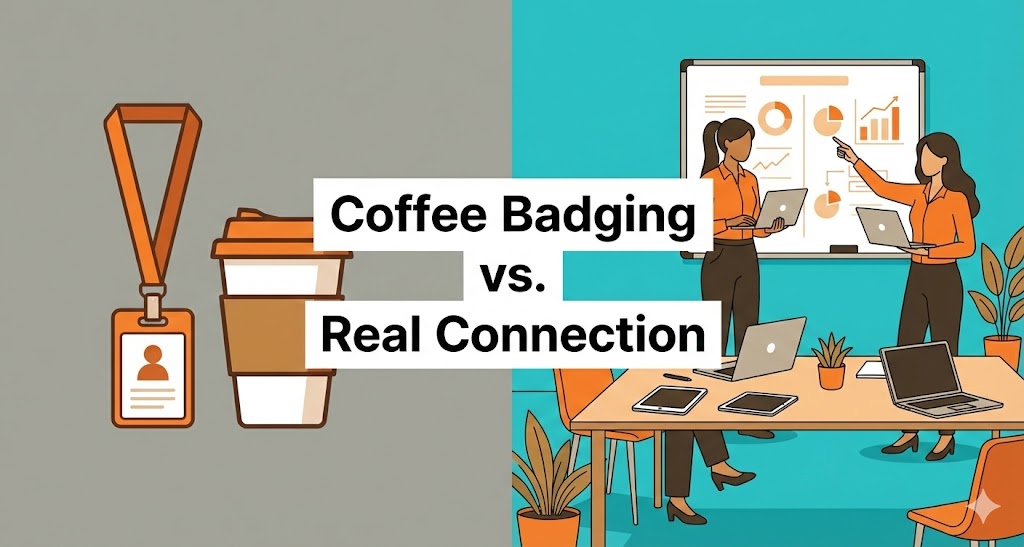
The Definition: Coffee Badging describes when employees come into the office just long enough to swipe their pass, grab a flat white and show their face before heading home to do their real work. It’s the modern “office cameo” – a sign that presence has replaced purpose.
What it Reveals: When workers resort to Coffee Badging, it signals a deeper problem with employee engagement. The office has become a checkbox, not a catalyst. In many organisations, employees feel that coming in adds little value to their productivity, collaboration or career growth. For business leaders, this is an early warning sign. It suggests the workplace no longer supports problem solving, human connection or meaningful performance – all key drivers of retention in today’s job market.
The Fix: The answer isn’t to monitor attendance more closely but to rethink the value of the physical workspace. A modern office should serve as a tool for productivity gains and a hub for human interaction. More than just somewhere with better internet and fewer distractions than home.
When the workplace actually helps people work better, they stay for the collaboration, not just the coffee. That’s how Sussex businesses can maintain engagement and create an office culture that people genuinely want to be part of.
The Hushed Hybrid
The Definition: The Hushed Hybrid happens when managers quietly allow flexible work arrangements despite an official return to office policy. It’s flexibility on the down-low – an unspoken agreement that lets employees work from home when they need to, even if company policy says otherwise.
What it Reveals: When hybrid work has to be hidden, it points to a breakdown in trust and communication. Many organisations adopted strict RTO mandates (just take a look at the list of major firms adjusting their previously flexible remote work policies here) in response to economic uncertainty, hoping to boost productivity and teamwork. Yet this rigid approach often backfires, especially when employees feel they must hide their working patterns to stay in their manager’s good books. It erodes psychological safety and drives top talent toward employers who offer genuine flexibility and respect for work life balance.
The Fix: For business leaders, the lesson is simple: flexibility works best when it’s official, not secret. By embracing open hybrid policies, companies can improve employee experience, retain talent and build stronger team culture. JetSpace helps make that possible. Our flexible office spaces in Brighton and Shoreham let businesses right-size their footprint – providing professional hubs for collaboration without committing to desks for everyone, every day.
When flexible work becomes a transparent strategy rather than an underground movement, both employees and employers win. The result is a culture where productivity grows, engagement stays high, and work feels like it belongs again.

Chronoworking
The Definition: Chronoworking is the idea that employees should work in sync with their body clocks rather than a fixed nine-to-five schedule. Early birds might start at dawn and finish mid-afternoon, while night owls do their best work after dark.
What it Reveals: Chronoworking reflects a deeper shift in workplace trends: the move from managing time to managing energy. Many UK employees, especially younger workers, are questioning the outdated belief that productivity equals presence. Instead, they’re asking for flexibility that supports mental health, creativity and long-term performance. This trend ties closely to human centric skills like emotional intelligence, self-awareness and clear communication – qualities that drive engagement and innovation in the modern job market.
Business leaders across Sussex are recognising that AI tools and automation can boost efficiency, but real success still depends on how well humans perform. The ability to balance technology with wellbeing is now a key driver of retention and job satisfaction.
The Fix: To support chronoworking, infrastructure must match the rhythm of the people who use it. That’s why JetSpace offices offer 24/7 access for tenants. Whether your team includes early risers at our Shoreham Hangar 4 site or late-night developers at Grand Parade in Brighton, your space is ready whenever productivity strikes.
By embracing flexible schedules instead of resisting them, Sussex businesses can improve employee experience, maintain engagement and attract top talent – all while future-proofing their workplace for the years ahead.
Office Peacocking
The Definition: Office Peacocking is what happens when companies panic about low attendance and decide to throw money at the problem. Neon signs, beanbags and beer taps suddenly appear, all in the hope of luring employees back. It’s office design as performance, not purpose.
What it Reveals: This trend highlights how many organisations still confuse style with substance. In the race to boost employee engagement, they invest in aesthetic upgrades but overlook what employees actually need to perform – clarity, collaboration and focus. When the workplace becomes a photo opportunity rather than a productivity tool, companies risk losing both credibility and capital.
The past year has shown that most employees care less about décor and more about whether their environment supports real work. Business leaders need to invest in function first. That means spaces designed for teamwork, problem solving and decision making, not just Instagram appeal.
The Fix: Whilst a pleasant working environment is obviously going to encourage employees to use your space more often you don’t need to bribe them with expensive window dressing that may end up rarely being used (buying barrels of beer each month for a ten person team is just asking for wastage). From well-equipped meeting rooms to thoughtfully designed breakout areas, the best spaces help Sussex businesses stay agile while maintaining professionalism.
At JetSpace we offer tenants a blank canvas to deck out their suites as they please, sat within a pleasant and well maintained professional office environment with communal facilities. But our tenants aren’t paying for funky furnishings or break room pool tables.
By avoiding Office Peacocking and focusing on practicality, companies can create workplaces that genuinely improve employee experience and productivity – even in an era defined by tight budgets and evolving HR trends.

Loud Labourers
The Definition: Loud Labourers are the opposite of quiet quitters. They spend more time talking about work than actually doing it – posting on LinkedIn, staying active on Slack and over-communicating their every move to prove their value. Over 90% of people reading this will know exactly who we’re talking about here! It’s a symptom of visibility anxiety, a growing issue in remote work cultures.
What it Reveals: When employees feel they have to perform productivity rather than demonstrate results, it’s often because they lack psychological safety. Many organisations haven’t yet built clear systems of recognition for hybrid teams. Without in-person cues, workers worry their efforts go unseen, especially during times of economic uncertainty. This insecurity can be amplified by technology itself – endless notifications, message threads and status updates that give the illusion of activity but not real performance.
Managers and business leaders across Sussex are discovering that while AI tools and digital platforms can streamline workflows, they can’t replace the trust built through genuine human interaction. Emotional intelligence, clear communication and regular face-to-face collaboration remain essential to sustaining morale and maintaining engagement.
The Fix: The most effective way to quiet the noise is to create regular, meaningful opportunities for teams to meet in person. A dedicated office base helps restore balance, giving employees space to share progress naturally instead of broadcasting it digitally. JetSpace’s flexible offices make this easy for growing Sussex businesses – offering the structure of a cost-efficient professional workspace without the rigidity of a full-time lease.
When employees feel seen for the right reasons, productivity improves, culture strengthens and the workplace becomes a space for progress rather than performance.
What This Means for Business Owners
Taken together, these 2026 workplace trends tell a clear story. The future of work isn’t about gimmicks or rigid policies. It’s about understanding how employees feel, how they work best and how to build environments that support both performance and wellbeing.
Across Sussex, many organisations are rethinking how they use office space. SME owners are realising that flexible work arrangements aren’t just a passing phase – they’re a strategic advantage. In an era shaped by artificial intelligence, talent shortages and shifting employee expectations, the most successful companies are those that invest in human connection as much as technology.
When you create an office that employees actually enjoy using, you strengthen your talent pipeline, protect institutional knowledge and retain your best people.
For business owners, the message is simple: a modern workplace should be flexible, functional and human. The right environment can help you navigate economic uncertainty, maintain engagement and future-proof your business for the year ahead. JetSpace offers that foundation – spaces that work for the way your team really works.

Your Gateway to Productivity Gains
The new workplace dictionary of 2026 might sound playful, but it reflects serious shifts in how employees work, think and connect. Coffee Badging, Hushed Hybrid, Chronoworking, Office Peacocking and Loud Labourers each reveal something vital about today’s workforce – the need for flexibility, purpose and trust.
The three main takeaways are clear:
• These 2026 workplace trends reveal deeper cultural and operational challenges for employers.
• Businesses that prioritise employee experience and human centric skills will retain talent and improve performance.
• The right office environment remains essential for collaboration, creativity, and long-term growth.
As AI adoption accelerates and hybrid work evolves, business leaders must balance technology with humanity. That’s where spaces like JetSpace come in – providing professional, flexible offices that help Sussex companies stay ahead while giving employees the freedom to thrive.
If this article resonated, your next step might be exploring how flexible office design can improve employee engagement and well-being – just take a look at our posts on creating distraction free workspaces and effective space utilisation for small offices to build directly on what you’ve learned here.
Alternatively, if you’re ready to explore how JetSpace’s serviced offices could serve your business as a modern, flexible, employee friendly working environment just get in touch.
Call on 01273 917977 or complete our enquiry form
enquire book a viewing